Do you want to get stuck in your bed when you get older, or do you want to spend your later years with a sound mind and body? Gail Zugerman sits down with Dan Metcalfe, an internationally acclaimed performance coach and the brilliant mind behind the revolutionary Total Balance Mobility. Together, they break down the seven pillars of natural health, a neuroscience-based approach to achieving brain and body transformation. From relaxing yourself through deep breathing to setting a strong mindset to shatter limiting beliefs, discover what it takes to achieve a quality lifestyle and feel younger all over again.
—
Watch the episode here
Listen to the podcast here
Seven Pillars Of Natural Health With Dan Metcalfe
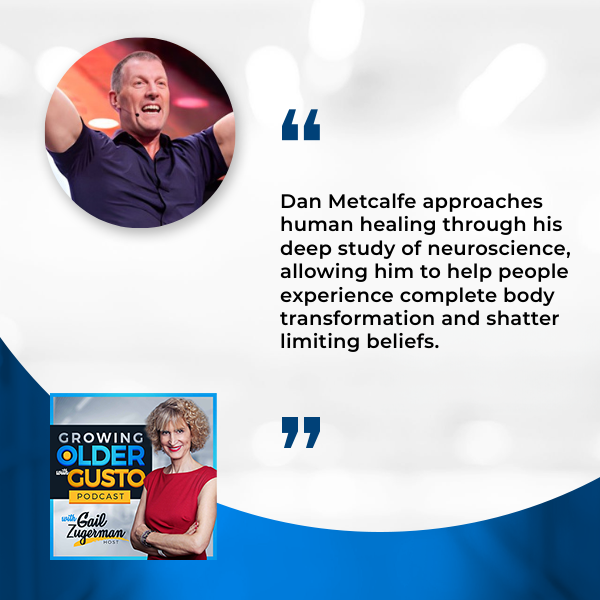
We have a very special guest on the show, Dan Metcalfe, who’s coming to us from California. He’s an interesting man who took a life-altering event and turned it into a successful career. Dan is an internationally acclaimed performance coach, speaker, and creator of the Total Balance Program and the Metcalfe Method, a neuroscience-based approach to brain-to-body transformation.
His work stems from overcoming a catastrophic spinal injury that left him paralyzed on stage, and later surviving a partial brain death after a bicycle accident. He has helped over 70,000 people worldwide who have Parkinson’s, MS, and Olympians with injuries. He’s also starred in global theater hits like Starlight Express and worked on films with Shirley MacLaine and Mark Bennett. Also, aside from all this, he was a ten -year spokesperson for Under Armour. He has so much to tell us and talk about, so let’s get started. Welcome to the show, Dan.
Thanks so much for having me. I love the word gusto. It’s great because it’s so energetic. I love your show.
Thank you so much. Let’s start out with you mentioning to me that the work that you do centers on what you are calling the seven pillars of natural health. Can you speak to us about what these seven pillars are and how they interact, to start us off that way?
Before we start, I wanted to let everybody who’s reading know that there’s a saying that I love. If the pilot light is still on, the flame can be immense. Think about it. When I look at the people that I’ve trained, so many people in their 60s, 70s, 80s, 90s, or even 100, the difference in them was their willingness to do the work. If you’re not willing to do the work, everything else becomes a waste of time because the magic we seek is in the work we avoid.
To everyone tuning in, I promise you, you can do more, achieve more, live happier, and live healthier if you’re willing to put in a little bit of effort. This brings me to the seven pillars. The seven pillars are what we grew up with. When we were born, we were born superhuman. We were incredible. We didn’t know that we should get sick or that we’re going to get sick, or that there is no recovery or anything. Our bodies were just there. We played in life. We don’t stop playing because we age. We age because we stop playing. In this episode, I want to share some incredible tips that I’ve seen tens of thousands of people have incredible success with because I truly care.
Let’s bring it on.
Achieving A Relaxed State Through Deep Breaths
Pillar number one, oxygen. It’s the number one critical aspect to our survival. If we don’t have oxygen, we are going to end up not being around anymore. The seven pillars are organized in importance for living, but it doesn’t mean you have to focus on them in the order that I give. Oxygen can be how we breathe. For example, most people take short, shallow breaths, which sit in our upper respiratory system, which puts our nervous system into a fight or flight because the body doesn’t feel relaxed. Everybody knows that if you sit there and take in deep breaths, you feel more relaxed naturally. If we do that, we oxygenate better, and we allow our nervous system to relax.
There’s much more to it, but we’re going to give little tips here. I tell people all the time to spend five minutes a day sitting down, eyes closed, taking in deep breaths and slow breathing out. You’ll be amazed at how that will affect how you feel and also help your body to heal quicker because we’re not in a stressed state. We’re in a relaxed, comfortable state.
They often do that with meditation. They have you do that.
Meditation is fantastic for the human spirit and for the biological body, too.
We’re all going to take some deep breaths after this episode.
Hydrating Yourself The Right Way
There’s so much more within that, but I don’t want to overwhelm the information. Number two is probably one of the most critical. It’s hydration. We all know we should drink, but we’ve trained our bodies to get used to not having the amount of water that we need. As we age, we don’t want to drink later in the day because we’re going to wake up in the middle of the night.
We should be drinking water, but we have trained our bodies to get used to not having the right amount of water we need.
Seventy-five percent of adult Americans are in a chronic state of dehydration. I was a head coach on the Olympic program. We knew that 3% dehydration could lead to up to 20 % underperformance. As we begin to age, we hear, “I’ve lost my memory. I can’t remember things quite as well. I keep forgetting things or where things are.” Dehydration is a critical factor in memory retention.
The truth is, we don’t forget our memories. If we’re trying to think of something we can’t, and then we let it go and stop thinking, two days later, it suddenly comes to us. We go, “Now I remember.” We haven’t thought of it. We haven’t gone and researched it. It came back. We don’t lose our memory. We lose our accessibility to memory, and a huge part of that is hydration. I can give a quick little tip here. Is that all right?
Absolutely.
What I say to people is to fill up a glass of water. When we’re told we need to drink between 8 and 12 glasses of water a day, we go, “That’s so much. How am I going to drink that much?” We have to train ourselves to do it. When we normally drink a glass of water, we feel bloated. We don’t feel better. We feel heavy or sluggish, and most of what isn’t being absorbed is going to be peed out.
What I say to people is, “Fill up a glass of water, have it by your side, and sip it through the hour. At the end of the hour, fill that glass up again. If it isn’t finished, it’s okay because you’ve been sipping. Now, we can look at each hour, over 8 to 10 hours, and say, ‘Did I finish that water?’ Don’t glug to get to the end to try and finish it. Get used to sipping because the body absorbs it more.”
This is probably the most critical tip. Before we go to bed at night, we’ve said, “I don’t want to drink two hours before I go to sleep because I’ll wake up. I want to sleep through the night.” Start working backwards. If we sleep 8 hours and don’t drink for 2 hours before we go to bed, that’s 10 hours of no liquid going into our body. We get dehydrated as we sleep. By breathing, we dehydrate.
This is my tip. Before you go to sleep at night, the last thing you do after you’ve cleaned your teeth and got set up is have one small mouthful of water. What will happen is when you swallow, it’s going to sit in your gut. You’re already probably slightly dehydrated. The water will be absorbed. It won’t go to your bladder and sit there. It’s going to be absorbed through the cellular level, so you’re not as dehydrated when you wake up in the morning.
Don’t we get that, though, by brushing our teeth before we go to sleep?
Most people don’t swallow.
They might not swallow. That’s true. I’m thinking about rinsing after you brush your teeth.
It’s not going into our gut. Our gut is where it starts to go through the cellular process and helps hydrate. It’s a great point you bring up. We want that water sitting in there. We want good water. We don’t want the toothpaste, fluoride, and everything going in as well. Once that happens and once you get comfortable with that, take another mouthful of water fifteen minutes before you go to sleep. It may take you a week to get there. You have 1 mouthful 15 minutes before and 1 mouthful right when you go into bed. It’s a small sip.
Then, you work backwards. You take a small sip 30 minutes before, and then you take a small sip 45 minutes before. One hour before, you should have had five sips. Do it over a month. Have a glass of water or a bottle of water next to your bed, and before you get out of bed, start sipping for the first hour. It’s incredible for brain health, and it gets your body working.
I’m going to try that. That sounds very interesting. What about if you eat fruit that has high water content? Does that count?
You’ll hear people say, “I drink my fluids.” I think it’s great. However, there can be a lot of natural sugar in there that can give us that spike up and down. Fruit is great. Artificial sugar is not. We know watermelon is great.
What about an apple, which is mainly water?
There’s not as much as there is in fruit.
Maybe not as much as in an orange.
We want to make sure we’re hydrating, for me, more than just fruit. Most people don’t want to eat fruit, you know, half an hour before they go to bed. We don’t want to have the stomach acid working while we’re sleeping. Our body’s energy should be working on recovering from the day and preparing for tomorrow.
Improving Your Sleeping Habits And Patterns
It sounds good. It sounds probably right on target. Let’s move on. We’re going to talk about sleep, right?
Yes. Number three is sleep. We know that most people don’t sleep well. They’re not getting enough sleep through the night. Hydration is the easiest one to address because that’s a cognitive action. Sleep can be a tough thing because we’ve been taught that if we’re not sleeping well, we fear that we’re not going to sleep, so we tend to focus on what our fears are. When we stay up, we can’t go to sleep.
There are certain protocols that most people know but we don’t adhere to, things like not having screens before you go to bed, at least an hour before. Try to have a completely dark room if you can. It’s important. Even having a flashing alarm clock next to you can affect our subconscious while we’re sleeping. If you’d like to have an illuminated alarm clock, face it away from you.
Natural Health: Even having a flashing alarm clock next to your bed can affect your subconscious while sleeping.
I have a question, to interrupt for a second. I have an Apple Watch, and it tracks my sleep. It tells you like REM sleep, core sleep, deep sleep, how many times you wake up, and whatever. It’s very cool. I noticed that my deep sleep is the least of all my sleeps. Less deep sleep than REM or core. Is there any way to change that as you get older?
What time do you go to bed each night, roughly?
About 11:20.
Is that consistent?
It is consistent. I am getting seven hours, which for me is very good.
That’s the number one thing. If you wake up and you feel awake and alive, that’s great. Everyone’s different. As much as everyone says you should be going to sleep at this time or wake up at this time, we are all different. Some people need ten hours of sleep. High-performing athletes need more. Yet, you have somebody who maybe is more rested, and six hours is enough for them. We’re all unique. There are studies that are out there that say going to sleep at 10:00 each night, the 2 hours before midnight, because of the sunset, our natural circadian rhythm will give us more deep sleep between 10:00 and 12:00 than we would get from 12:00 until 6:00.
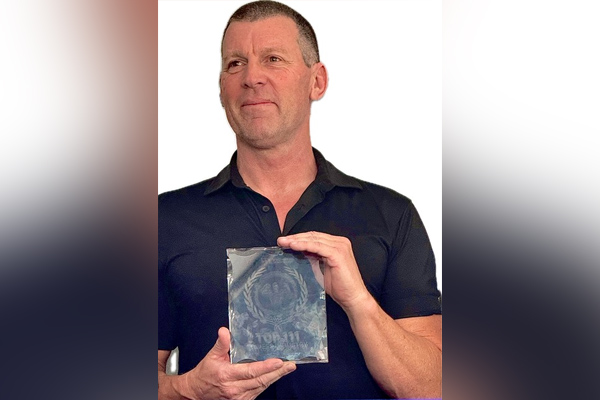
Natural Health: Studies show that going to sleep two hours before midnight will give us more and deeper sleep.
You’re right. I get my deepest sleep immediately when I fall asleep.
If you could move your sleep half an hour forward, you’d probably have a little bit more deep sleep. I want to share this. This came out as well. Dr. Matthew Walker, who, for me, is one of these sleep gurus, said that they found through testing that consistent, regular sleep that your body gets used to is more important than the time you go to sleep.
If you’re constantly like, “I’ll go to sleep at 8:00 one night. I’ll go to sleep at 1:00 the next night,” that messes the body up more than it does if you have a consistent schedule. 11:30 every night is better than doing 10:00, and then 1:00, and switching. Be consistent. We know getting up in the morning early and getting in the sunlight, if you can, is great for your body clock. When you go to sleep at night or when the sun is setting, if you can get out and watch that sunset, it helps set your body to get used to going to sleep.
I never knew that. That’s interesting. I love sunsets. That’s great. It’s an easy fix.
It replicates a candle. If you think, when we put candles on it, the light emitted begins to put us more at peace. It emits almost the same light frequency through the sun at sunset as a candle does.
Nourishing Your Body With Healthy Food
That’s very nice. If I can’t get to the sunset, I can light a candle. Nutrition, your next pillar.
Nutrition is critical. If I ask you a question, when we’re hungry, what do we do?
We eat.
There you go. Brilliant. It’s very simple. Sometimes, we ask questions and go, “It can’t be that simple.” It is. One word changed my whole outlook on nutrition and my health. I was an athlete. I performed. I’m still an athlete. I still race compete. I was carrying more body fat than I wanted to. We go on these diets and try different things. We’re like, “Don’t eat after this time. Don’t eat what we enjoy because it’s bad for us.”
I changed one word, and it took me from 21.2% body fat to 8.2% body fat by changing one word. I love sharing this because people would take it and do with it as they want, but I would guarantee it will make a difference. When we’re hungry, instead of thinking, ”I want to eat,” where we grab the cookies, the chips, the cake, or all the things that taste good because of over-sugar, think of the word nourish. Change the word eat to nourish.
We know what’s good for us, and we know what’s a quick fix. When you think, “I’m hungry,” instead of looking at the quick food, say, “What’s good for me?” Grab the fruit you picked up. Make a healthy sandwich with good-quality bread if you want to have it with bread. Have yourself a baked potato if it’s good with your system. We’re all unique. Have your vegetables. If you have those, it will be incredible how the body will heal itself. Energies will change without that constant change of blood sugar levels, the crashes, and the rises that we become addicted to because of the sugars and chemicals that are in our food naturally.
I also know that there’s a big talk about not eating processed food or overly processed food, too.
There’s a great tip that I learned from a nutritionist. They said, “Read what’s on the label.” If you can’t pronounce the words, it’s not good for you.
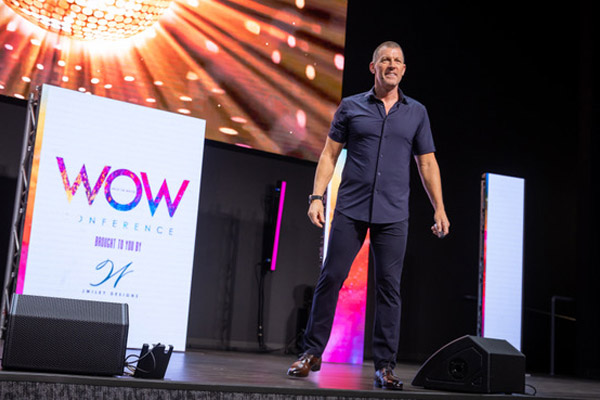
Natural Health: Read what’s on the label of your food. If you cannot read the words, they are not good for you.
That’s correct. That’s a good one.
The fewest ingredients possible. It’s pretty easy to know what’s in an apple. It’s there. If we start adding all these other things to it, it’s probably not good. It’s hard to find great food, so find the one with the fewest additives.
Maintaining A Consistent Exercise Routine
That sounds like a good plan. Onward. Next pillar.
The next one is exercise. Exercise is critical. I love this one. This one is where it saved my life after my paralysis on stage, and after getting hit with a metal pole at 22 miles an hour, and part of my brain died. I was knocked unconscious for over three minutes. For the doctors, in both cases, I was a number. I was a statistic. I wouldn’t be here if I listened to them and didn’t trust myself. It’s not that they’re not good people. They care. They just don’t have as much time to invest in us.
To everybody tuning in, invest in yourself because you are incredible, and you’re made to heal. You’re born to heal. If we do the right things, the body will help take care of us. With exercise, we know that getting up and moving is critical. This is maybe more important to the aging community than it is to any other. Lack of movement will decline the body.
There was a study that was done on 1800 ladies, where they were followed for over 10 years. This is a medical scientific study that went on. Those people who had good balance, and we’re talking about the simplicity of lack of falls or fear of falling, lived eight quality years more across the board than those who didn’t. We lose that balance not because we don’t have the strength. We lose our balance because we’re doing less of it.
That’s when I created Total Balance Company by accident to help Bob Eubanks. Everyone will know Bob Eubanks from The Newlywed Game. He was falling and was scared. Every morning he woke up, he was fearful. We know falls are the number one cause of death. I own my own sports performance training center, and I said, “Let me train you.” In two minutes, I realized in training Bob that I was 100% wrong.
They’ll tell you, “If you have balance issues, strengthen the legs and the core. If you’re shuffling, strengthen your hip flexors. You’ll walk better.” It’s not true. I’ve trained over 70,000 people and had incredible results that blow away and prove scientifically that all our balance and mobility come from the brain, not the body. If it came from the body, we’d be taking babies to gyms to help them learn to walk.
There are millions of people out there who have never been in a gym who are 100% great with their balance, mobility, and strength, and are able to do things. We have to train the brain. It’s very simple to train the brain because when we move, the brain is active. We need to train the pressure points in our feet and the messaging going sensory back to the brain to keep us going. If you don’t use it, you’ll lose it.
I tell people, “When it comes to exercise, do what you love. Put on the music in that house and dance. You don’t have to join a gym. Gym is not the one that’s going to save you. Your movement is. Go walking every day. Go on different surfaces. If you’re scared to go up and down steps, practice safely going up and down steps. The brain will engage.” I could go deeper into this. I won’t because of time. It’s so scientific.
In the cerebellum, which governs our movement that goes to our motor cortex and sends the motor neurons down, there’s a small piece in there called the pyramis. The pyramis has memory of movement. If we have had a fall or we’re scared of falling, that will become activated when we move, turn around, and go, “Go slower. Slow down. You’re in a dangerous situation.” That then governs the body’s ability. Do what you love. Stay safe. Move more each day. Challenge yourself. I have an incredible system that helps with this, but I’m not here to sell that. I’m here to encourage people and say, “Get up and move. It will affect and determine your quality of life.” I’m so passionate about it.
Get up and move. It will affect and determine your quality of life.
I can tell. I agree. I always feel better after I work out.
You look great as well.
Building The Right Mindset To Get Better
Thank you. Onward. Mindset, your next pillar.
Number six. This is the first one I teach. We are what we think, and we’ll only do what we believe. If we have the wrong mindset, we will quit. The reason it’s number six, even though, for me, it’s the most important or the foundational basis, is because we can still live without a good mindset. We can have a poor mindset and still survive. If we’re not drinking water, not breathing, or not eating, that would take us down much quicker.
Think of everybody that’s tuning in. All of you have incredible experiences. You’re more valuable than you know that you are. You’ve been slowly numbed down or dumbed down to not be as important because of either age, or you were brought up in a society that kept you withheld. Everyone tuning in will know that there’s more to them than has ever been seen.
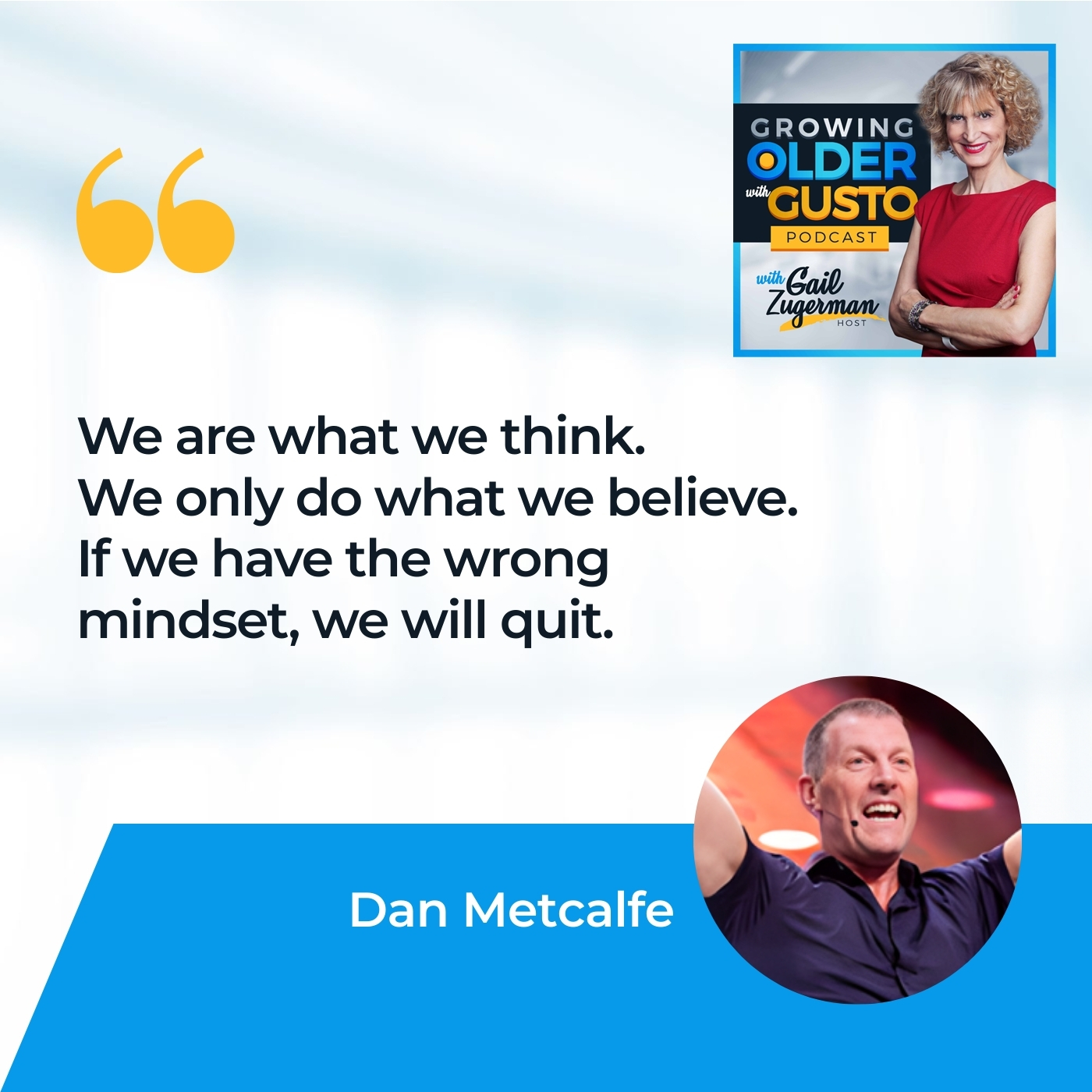
If I said to you, “How old do you feel? “ Everyone says they are at least twenty years younger than how they feel compared to their chronological age. That’s your mindset. You know you could do it, but you’ve been brainwashed in some ways to believe that when you reach this age, it’s okay to be less because it happens. I have a great story with my dad. He went to the doctor. He was 83 years old. He goes, “Doctor, my left leg is hurting.” The doctor goes, “Malcolm, you’re getting older.” He goes, “My right leg is the same age. How come that one’s not hurting?” There are solutions.
What did the doctor say?
He laughed. What was he going to say at that point? Your mindset is, “I’m here to get better.” We’re made to heal to get better. Trust in yourself, and then do the things that will help you, such as eating clean, sleeping well, hydrating, exercising, taking your time to breathe, and living life.
Challenging Yourself To Stay Active
Also, a challenge. I think I know what this is, but do tell me.
You tell me what you think it is because that’d be great.
As we get older, it’s nice to learn something new, like a new skill, and to challenge ourselves. That keeps us engaged in living and living well. If you’re always doing the same puzzle or playing the same musical instrument, maybe you want to try a different musical instrument, try a different puzzle, meet new people, take a trip somewhere you’ve never been, or do something that’s out of your realm of normalcy. That keeps you going. We’re going to have to invite you back for another session. We have to wrap this up in about nine minutes. I’d love to have you back on the show. This is so interesting. I could talk forever to you. It’s fascinating. That’s to give you a heads up. How did I do with that?
You did great. You’re 100% right, but I’m going to take it even deeper. Challenges were what we grew up with as kids, where we had goals, where we set dreams, and where we believed in the American dream. We were free to dream in America. I come from England. America was always the land of opportunity, and it was a destination. We saw so many great things coming out of America. It’s still a beautiful country. As kids, we weren’t limited, but now, we limit ourselves because others told us this is the best we could do. With challenges, do not think about something that you want to do again. Think about the greatest thing you’d love to do again.
When I was training people who were in wheelchairs, or they were walking with walkers or walking sticks, and they went, “I’d love to be able to walk around the block again,” I said, “That’s not exciting.” The chance of sticking to it doesn’t have enough drive to go through the training. The goal has to be greater than the effort it takes to achieve it, or we’ll quit because it doesn’t drive us.
The goal has to be greater than the effort. You will quit if something does not drive you.
I said, “Instead of thinking about walking around the block, where would you love to go?” They were like, “I’d love to walk on the beach again. I’ll never do that because the sand’s unstable.” I said, “We’re going to work for you to go walk down the boardwalk onto the sand and put your feet in the water.” They’re like, “I can’t do that.” That’s the mindset. We’ve got to change the mindset.
I want everyone to select their greatest goal, even if they don’t achieve it. Everything that you pass on that path to get there, chances are, you will if you want it bad enough. Walking around the block became easy. Then, it’s like, “I want to go climbing on a hike. I want to go up a hill. I want to go back, walk in the shops, and not worry about my balance, mobility, and stamina while I’m carrying bags or buying a pair of shoes that I never thought I’d be able to go and pick up myself.” Whatever it is, it’s got to be a challenge that exceeds. It could be something you did before and never thought you’d do again. It could be like, “I’m 80 years old. I would love to go parachuting one more time. I used to be in the parachute regimen.”
When I trained Bob, he would love to get back on stage again and get back on TV. I trained him, and in three weeks, Bob went from what I call the senior shuffle, hunched over, looking at the ground, and scared to take your feet off the ground. We did the system, the Metcalfe Method that I created. In three weeks, Bob was running six miles an hour on a treadmill, running up and down stairs, and going out playing golf again.
He got back on stage, got back on TV, lost the fear of the years ahead, and instead replaced it with excitement. That probably was the biggest change. Even though he physically completely changed, emotional change, excitement, and self-belief were the greatest changes I saw. I’ve seen that with so many people who have gone through the challenge because they’ve set the highest goals for themselves within that.
Life Is Not About Existing But Living
That’s a nice story. That is about Bob Eubanks. There’s so much more that I want to talk to you about. As I said, I hope you’ll want to come back and be on the show another time so we can further delve into everything you have to share with everybody. Are there any takeaways from this discussion and conversation that you might want to share with our audience?
Absolutely. First of all, I’d love to come back. Maybe if any of your readers want to drop questions in, we can go to a Q &A as well.
That would be great.
I love that. We are born at a cellular level to live to 122 years. People go, “I don’t want to live to 122. I don’t want to live where I can’t move.” It’s not about existing. It’s about living. All of you can live better today than you lived yesterday. We’re built to live for 122 years. Our cells have telomeres on the ends that slowly get broken down with stress, food, toxicity, and not taking care of our bodies and our minds.
I want everyone reading to know that if you want to live a quality life, and we’re not talking about in a hospital bed on drips and on oxygen, invest in yourself. We were taught growing up that it’s bad to be selfish. Self-love is not selfish. Self-love is essential because the more you can do for yourself, the more you can do for others.
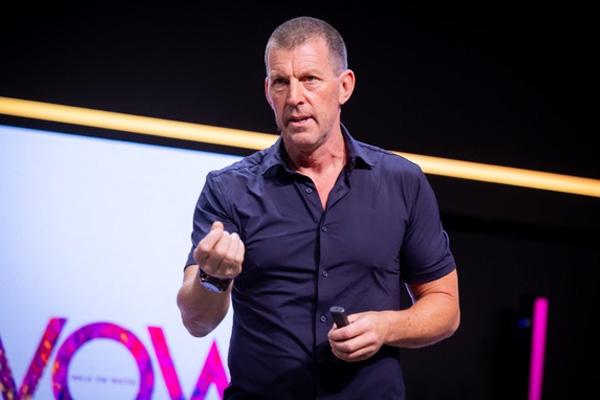
Natural Health: If you want to live a quality life, invest in yourself.
Who doesn’t want to still be playing with their grandchildren on the floor? Who doesn’t want to have their children growing up being able to go to their sports events? Invest in yourself. Give yourself self-love. Set yourself goals, and then commit to them. If I can help at all, or I’m sure, the amazing show that you have, listen in, learn, trust, believe in yourself, and your future is golden, not your age.
I love that. That’s wonderful. What a great way to leave this. Thank you so much. We have Dan Metcalfe, creator of the Metcalfe Method. We have so much more to talk with you about. This has been fabulous. We’ve only cracked the surface here with you. I realize that. We’re going to get you on here again soon and continue this. If any readers have any questions, feel free to either direct message me or send me an email at GrowingOlderwithGusto@gmail.com. We’ll be glad to bring them up during the next show with Dan. That would be great. Thank you so much.
Thank you so much, Gail, and to everybody.
Thank you.

0 Comments