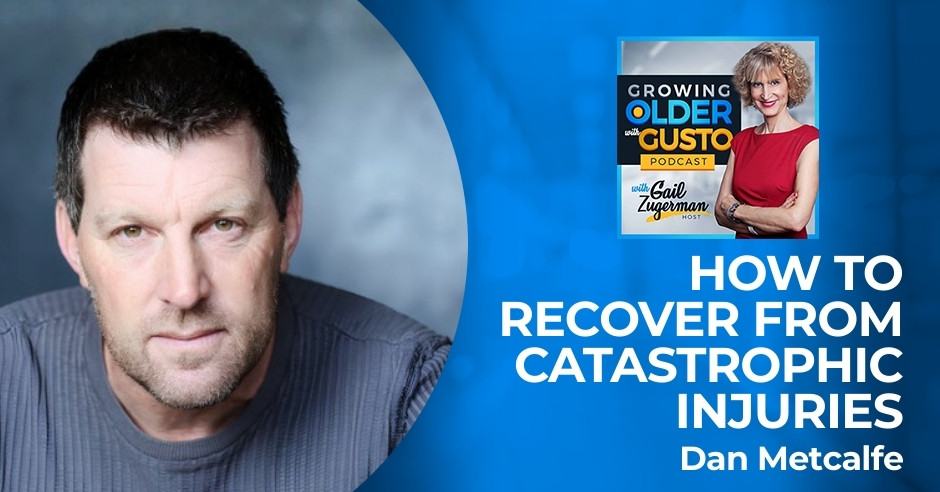
How should you use your time wisely to recover from catastrophic injuries and regain your energy? Dan Metcalfe, the SuperHuman Man, returns to talk about the most valuable thing in your life and how to put it to good use to achieve your highest performance. He joins Gail Zugerman to share how a committed mindset is a key component in healing the body from injuries, inflammation, and all kinds of illnesses. He also answers questions from the listeners, from the optimal way to drink coffee without becoming dehydrated to the right way to meditate every single day.
—
Watch the episode here
Listen to the podcast here
How To Recover From Catastrophic Injuries With Dan Metcalfe
We have Dan Metcalfe back. He is a repeat guest who’s based in sunny California, unlike the rest of the country. He is returning to the show to talk to you more about what he talked to you about the last time. If you didn’t read the first episode, please go back and check it out because he got some rave reviews. I have to say, Dan, that since you’ve been on the show. I’ve had so many people telling me they’re sipping water slowly and having a glass of water when they wake up. I’m slowing down myself. I’m trying, at least with the water. It has been great.
Dan is an epic man. For anyone who hasn’t read the first episode, he has a coaching program that stemmed from a catastrophic injury. He started plays. He has done it all, and he has come around to create his own business. It’s fascinating. Dan, I know you are going to start out with something memorable, so shoot.
Time: The Most Valuable Thing In Life
Thanks so much for having me back. Thank you to everyone who wrote in or read the first one and has taken action because otherwise, why would we be here? I want to share something right from the beginning. Again, we don’t age if we keep playing. That’s the bottom line. We don’t stop playing because we age. We age because we stop playing. We’ll get into this more. We talked about that in the first one. I want to ask you a question. What is the most valuable thing you have in your life?
My health.
For anybody else that’s tuning in, I’d love them to answer that question as well. Say it out loud, because when we say it out loud, we become cognitive, and we don’t jump around. I’m going to change your view a little bit about the most valuable thing we have in life. If I said to you, “I’m going to give you and everybody tuning in $1 million every single Friday for the rest of your life. It’s guaranteed. It’s in a holding account.” It goes on for a whole year.
Suddenly, you’re out one day. You’ve got $50 million sitting in the bank. You’re walking down the street. It’s hailing. There’s rain coming down. There’s wind blowing. You’re trying to hold on. You go to pull out something from your pocket, and a $100 bill flies across the street, into the water, and is being washed away. With $50 million in your bank. Do you think you’d go running after that $100 bill?
I wouldn’t want to risk falling and injuring myself, but I still think $100 is important.
Let me ask you to compare this one, then. I give you $1,000 and say to you, “For the rest of your life, you can never earn another penny. Here’s $1,000.” That’s it. You can’t invest it. You can’t grow it. It has to survive your lifetime. Exactly the same situation, and $0.1 fell out of your pocket. Would you go after that $0.1?
Yes.
That’s the reality, because value is relative to what we perceive we have. I’d like people to understand the most valuable thing we have in life. Many people will say, “My family. My kids.” Some people will say, “I love my bags and my shoes.” You said health. The most valuable thing we have in life is time.
You’re right. All we have is time.
You’re 100% right. I forgot. We keep forgetting, but we’re spending those valuable seconds. Look at them like cents. If one second is lost without a purpose, we can never get it back no matter how hard we try to go and get it. While we go through this talk, and I’m so happy to be back here with you again. I want people to understand that time is the most valuable thing you have. What you do with your time shows what’s most important to you. The magic we seek is in the work we avoid. We know we should do it. We don’t invest, and yet we expect to return.
Time is the most valuable thing in life. However, we do not invest in it and yet expect it to return.
Is that like learning how to play golf?
Absolutely. If you love golf and you want to go and learn, that’s what’s most important to you for that time. I want everyone to think about the time. Think about what you’re doing with it. I promise you, if you invest in yourself, as you do with your health and many other things that you do as well. We can all improve and reverse the system of aging.
How Brain And Mindset Drive Healing
That’s very interesting. That is so spot on. I have some other questions that are going to come up later in the show that people from all over the country have been asking me. Before we get to those, I wanted to ask you about some other questions I had that we didn’t get to in the last episode. I was curious. How did the brain and the mindset drive healing and performance?
I didn’t understand this until I lived it. As you know, and everyone who read the first episode, I had a brain injury where I was unconscious for about three minutes. A part of my brain died. I had to learn to talk, function, and move. I went through PTSD and depression. I had a massive weight gain compared to myself as an athlete. I didn’t know, so I started studying the brain.
The brain is brilliant, but only when it’s engaged. It’s like a computer. You can have the most powerful computer in the world, but if you don’t give it the right information and allow it to function, it’s just a piece of metal sitting there with great potential. Mindset is what activates the brain outside of the autonomic system. The autonomic system is things like our heartbeat, our blood pressure, our body temperature, and breathing. They’re the things that we do without thinking. The brain will only function to its highest level when we give it the information through our mindset, and the brain then goes to work.
It’s your best friend, and it is the center. Mindset is critical to believe and let the brain go to work. I was a head coach on the Olympic Development Program. We knew that performance was 80% to 90% mental. The more I’ve studied, I’ve realized it’s 100% mental. We’re all in the game of life. If we want to perform, we’ve got to engage the right mindset because the brain will not do the opposite of what we believe in and what we tell it.
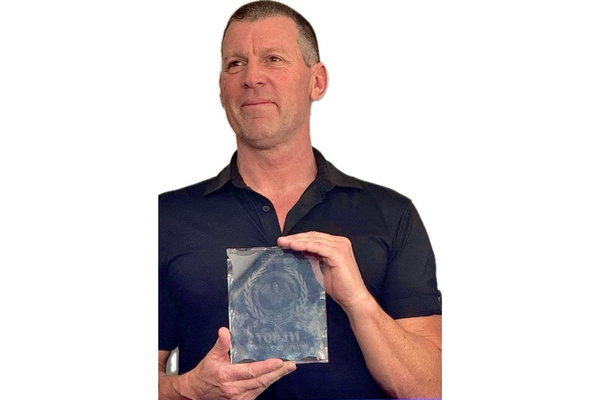
Catastrophic Injuries: If we want to perform, we have to engage the right mindset. The brain would not do the opposite of what we believe in and what we tell it.
How Brain And Mindset Drive Healing
That’s very interesting. You have to keep thinking about that. You had all these catastrophic injuries that people can learn about if they go back and read the first episode. How do you help people rise from a life injury or a life catastrophe like you had? You had two.
From the paralysis, that was self-discovery that I didn’t know. We always listened to the medical world and didn’t invest in ourselves with our own beliefs. We run to someone else to fix us. Self-education, self-belief, and being around people who have gone through what we’re going through. For example, I work with about 800 people who have Parkinson’s in a dedicated group.
When I looked online at Facebook, I started seeing that so many of the Facebook groups were fear-driven and pain-driven. They weren’t solution-driven. Everyone understood the pain they were going through, and I feel for those people. If we focus on the negative, that’s what we’re going to continue to live in. With this group of around 800 people with Dr. Eckel, it’s incredible. Everyone’s positive. We become our environment.
After my injury and my paralysis, I became a personal trainer. I worked at Gold’s Gym and Powerhouse Gym. I worked with a number of different people from different places. I always ended up getting the people coming in that were either out of shape, weren’t healthy, or were coming back from injuries or sickness. Most of the trainers want people who are healthy, so that they can look good.
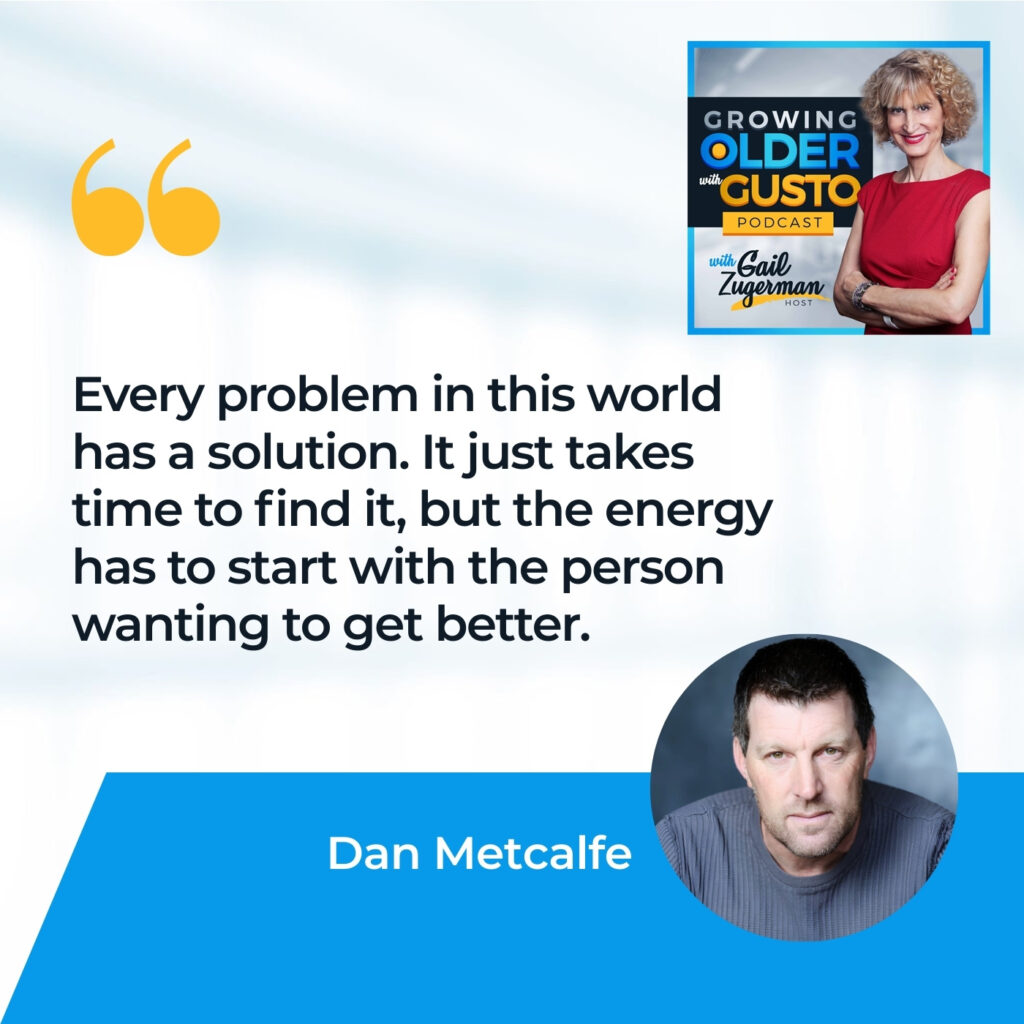
I began to realize that if someone has an issue, all I am doing is helping them solve their problem. I approached it with, “What’s the issue? What would you like? What’s the solution to get there?” Every problem this world has ever had from day one to day now has a solution. It just takes us time to find it. The energy has to start with the person wanting to get better. If they don’t care, then it doesn’t matter what I do. I’ve got a great story I’ll share about my mother. Maybe a little later on.
That’s interesting because I was going to talk about how I ended up being able to wear contact lenses successfully. I had dinner with someone and said, “I can’t wear them.” I remembered how I got to be able to wear them without any difficulty. It belongs to the same parallels as your story, I’m sure.
Let me ask you quickly because I’m curious. How did you change that from “I can’t wear them” to wearing them?
I never said I could. That’s the key. I wanted them badly. I’d been severely myopic since I was in second grade. I always wore glasses when nobody wore glasses. When I was in middle school, I was walking around blind for a year. Socially, I didn’t see people. They thought I was a snob, but I couldn’t see them.
It turns out it was my mother’s way of motivating me to be able to wear them. She let me stumble around for a year without doing anything drastically dangerous. For my birthday, she said, “Guess what? You’re getting contact lenses.” I said, “That’s great.” I went in and had no problem. They were amazed. They said, “We have football players in here, and the guys can’t put them in,” but I was no problem, ever.
That’s brilliant. That’s because your mother helped you build the mindset to then see the reward, which meant the work was worth doing.
How To Deal With Different Kinds Of Pain
You’re it for good moms. What is the emotional root of physical pain and disconnection? Can you tell our audience a little bit about that?
There are different kinds of pain. We have emotional pain and physical pain. One of the biggest things I see is self-abuse pain, where we continue to allow ourselves to suffer because we either don’t want to face the truth or the reality of where we are, or we’re waiting. I use the word hope. Hope, for me, is a procrastination where we’re waiting for someone to come along.
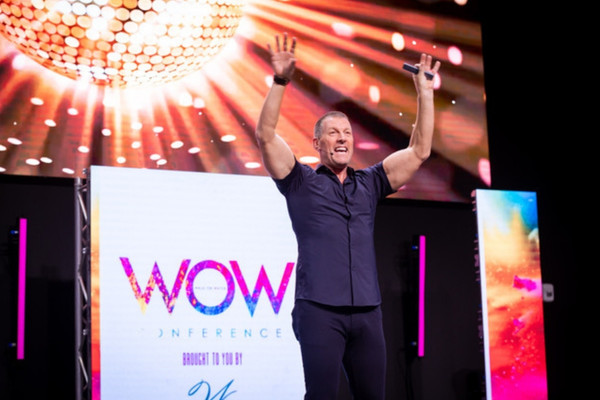
Catastrophic Injuries: Hope is a form of procrastination that makes us wait for someone to come along and save us.
Let’s go to physical pain. If someone’s going through a physical resistance, and we’re feeling it, and it’s affecting our day because our brain becomes conscious of the receptors that are sending back the messaging to the brain going, “This is a negative.” We can’t ignore it. That’s because over time, what happens is that receptors will stop feeling the same pain in the same way. We’ve all been there. We can try to turn off that pain, or it’s so bad that eventually, the brain goes, “I need to stop feeling this and focus on other areas that are drawing away.” The issue is still there.
I look at it and say from a plan point of view, “Let’s find what you can do.” It’s critical to have blood flow to heal. That’s so important. The sensory messaging from the injury to the brain needs to have consistent feedback so we can tell when we’re getting better or getting worse. We then have to say, “What can I do to create a movement around the area?” Let’s go to the elbow.
You’re like, “My elbow is hurting. I can’t even bend or straighten my elbow.” We don’t want to go to that point yet, where we’re starting to increase the movement. You want to start looking at your wrist. Ask yourself, “Can I move my wrist?” All the messaging, the blood is flowing past through the elbow. At the same time, we might want to say, “I want to move my shoulder.” We get movement going, which creates the ability for the brain to go, “Let’s focus on the elbow. Rest it to start seeing if I can get a little bit more movement each day.” We then begin to believe that we’re going to heal.
This happens in any part of the body. This also happens in the psychological situations that we go through. Whatever we fear and whatever we don’t engage in will continue to be a problem. It’s like the third law of nature. Whatever you resist persists, so face it, but be smart. That old saying no pain, no gain. It isn’t quite true. I’m not sure if that answers your question but certainly, the brain-to-body connection is critical.
We have limited time, so I’m thinking maybe we’ll jump into some questions from the audience. How does that sound?
Please do.
How Does Coffee Impact The Amount Of Water You Drink
We will start out with Joel in Jupiter, Florida. He would like to know how coffee impacts the amount of water you drink.
Great question, Joel, and thanks for sending in the question. It is not about coffee itself. We know that 98% to 99% of coffee is water. Theoretically, it should be hydrating us. It depends on when you drink the coffee and relative to the hydration factor it has. We know coffee is a light diuretic. We know it’s going to spike your cortisol and insulin levels.
If you want to enjoy drinking coffee, what you want to do is get up in the morning and have, in the first hour, 8 to 12 ounces of water. We want to hydrate first because the effect of the cortisol and insulin release that comes from coffee can make us not less hydrated, but less effective in hydration. There are other nervous system reactions going on to coffee, which is the caffeine and the spike. This would be my protocol. I don’t drink coffee myself, so I’m not coming from an expert point of view of a participant.
I read somewhere where they say, for every cup of coffee you drink, you should drink two cups of water to dilute the coffee. Does that make sense to you or not?
There are different studies out there saying 1:1 or 2:1. I look at it and say if you took it over the day, you shouldn’t be drinking coffee after 1:00 in the afternoon anyway. If you equal that up with water through the rest of the day, it should equal it out. I’m a big believer that for the first hour, drink water, have some protein, and have some fats that take away the negative effect and leave more of a positive effect of the caffeine. About 90 minutes into the day, after you’ve gone for a walk or after you’ve had some exercise, have your coffee. When you have the coffee, the nervous system goes, “Here’s the release. Here’s the cortisol. I’m expecting to have more energy because I must be doing something.”
I can’t have my espresso right into the cup of water? I have to walk the dog and then come back?
It’s better for you. It’s the way our body is designed.
Don’t worry, I’m sipping the water.
That should cover the first hour to 90 minutes of the day as well, sipping it. After you’ve had coffee, you want to do some form of movement. The body doesn’t realize the spike of cortisol, the energy that’s being released, the rising sugar that’s in our blood from a release of energy, is expecting to do some work. When we have coffee and then sit down, and this is why we end up turning that energy into an overload of fat in reality.
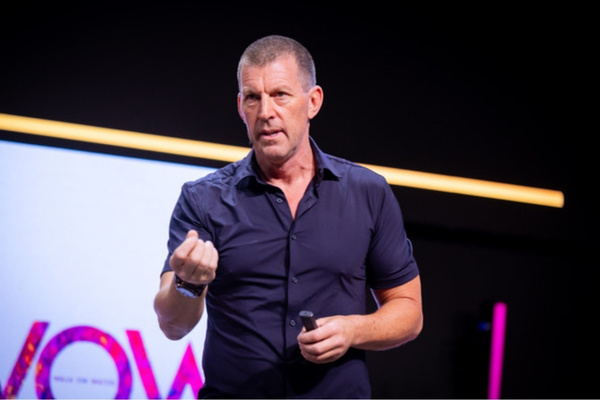
Catastrophic Injuries: After you had your coffee, do some form of movement.
The body goes, “I’ve got to go do some work. Here’s my spike. I’ve got this energy. I’m not doing anything.” What it does is it raises the internal energy of your body and the heat of the coffee. Our respiratory system and heart rate go up, which means we need more water once we’ve drunk coffee because the body is still feeling that extra potential of dehydration.
How To Work Around The Pain From A Neck Injury
That was great. I got to move on in the interest of time. I have a few more great questions that I know you have great answers for. Ellen in St. Louis would like to know how you work around the pain from a neck injury after a setback so that you can continue exercising.
I know that when I fractured my spine. I was paralyzed on stage in the Lloyd Webber show. The first thing to do is to evaluate what you can and cannot do. You don’t want to aggravate the injury. We want to look at anti-inflammatories. I’m a huge believer in red light therapy. It’s great for anti-inflammation and healing. I have four different red-light devices relative to what I’m looking to work on. You’ve got to get mobility.
I remember when I fractured my spine, I had swelling in the back. Over time, because I wasn’t moving it, I began to atrophy. That means the muscles are beginning to lose their strength. I had to start getting movement and find exercises that I could do without aggravating the injury to strengthen the muscles. Even to this day, we’re talking 30 years after my injury, if I don’t continue to support and strengthen the muscles, the spine starts taking the stress and weight. That can increase the pressure between the vertebrae on the disc because it’s holding itself up.
Get rid of the inflammation. Rest and recover when you need to. I’m a big believer in red light therapy. Start finding movements that you can do, and strengthen the muscles in your upper back, your shoulders, and your chest to support the neck. It’s so critical to get mobility going slowly. Don’t overdo it in one day. Do a little bit and see how you feel the next day.
Catastrophic Injuries: Start finding movements to strengthen the muscles after getting an inflammation. Just do it slowly and avoid overdoing it in one day.
If you say, “I feel good,” then good. Repeat it. Make sure you feel good the day after. If you’re like, “I’m going to do a little bit more.” You wake up the next morning and feel sore, go backwards a little bit. You pushed a little bit too far. Engage the brain in saying to that neck injury, “I’m going to heal.” Before you go to bed at night, and you heard this in the first one, say, “Brain, go to work. Fix my neck.”
I have so many questions.
I can give shorter answers. Jump in.
How To Work Around The Pain From A Neck Injury
This is from Debbie in Chicago. What meditations on YouTube do you recommend, and how long do you think one should meditate each day?
There’s a lady called Dr. Desi Bartlett, who I think is great. She has lovely meditations. I don’t meditate every day. I meditate when I begin to feel that I either want to visualize something that I’m going to go after, or I want to plan the path. If I’m beginning to feel stressed, I’ll get into breathwork. Breathwork is important. There’s also another gentleman by the name of Dr. Patrick Porter, who has a headset with meditations. Those are my two go-tos.
Are there any exercises that you find are helpful in helping people get to sleep? I know it’s an old conversation, but to fall asleep or create a deeper sleep.
It’s important that you set up a routine you stay consistent with. You can’t expect to be doing different things every day and then end up being able to fall asleep. Get into a consistent pattern. Trust it. I love to read. If I want to go to bed at around 9:30 or sleep at 9:30, I’ll start reading. My favorite writer is Mitch Albom. I’ll start reading, maybe about 8:30. I enjoy it.
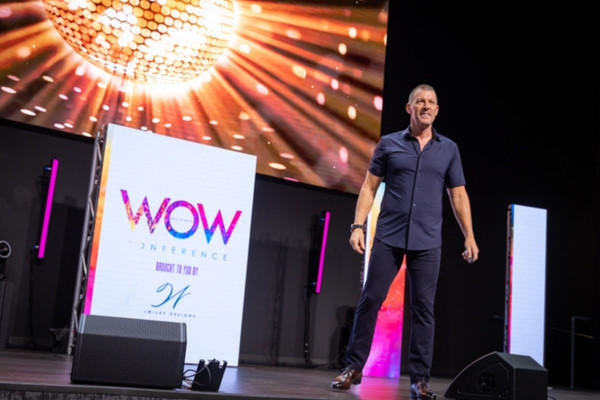
Catastrophic Injuries: Set up a routine and stay consistent with your sleeping practices. You cannot expect to do different things every day and still fall asleep easily all the time.
Have you read his book Twice?
I haven’t, but I’ve got it here, ready to read.
It’s a great read.
I love him. You get excited reading. You want to keep reading, but then it brings this parasympathetic relaxation because you’re off of your screens. Let the room be dark. This is critical. If you can’t sleep, don’t get frustrated. Take it as, “I’m not meant to be sleeping now. I’ll go into breathwork, and I’m going to start focusing on something I love in a relaxing way. Maybe a beach.” Something that doesn’t excite you, but something that relaxes you. Over time, it will work.
What Superfoods Should You Eat Everyday
Another question from Ellen in St. Louis. What would be on your list of superfoods that people should eat every day?
Some of the foods that I love are eggs. Protein is so critical. We need that. Creatine, which is not a food but a supplement, I’m big on. More clinical studies are coming out on the effect of brain and body health. I love sweet potatoes, but not every day. Our filtration system in our body, and our nutrient needs aren’t always going to be the same every day. If we exercise more for 1 day and don’t for 3 days, it’s different than what we need.
Variety. I love Brussels sprouts and broccoli. I do eat pasta sometimes, especially if I’ve got a race coming up in 48 hours. I love that. Chicken is great. I’m big into a little amount of supplements. There’s a great company, if I can say so. I’m not sponsored by them. I’m not paid to say this. They’re called Nutriment. They have all-natural, incredible supplements, but I don’t take them every day because the body should be creating its own. If we take too much of one thing to support the body, the body goes, “I don’t need to create it.” We can create a longer problem. I might take something once every 2 days, once every 3 days, or as I feel my body getting tired.
That’s very interesting. Lisa in Jupiter, Florida, has a question. Any suggestions you can give Lisa for motivating someone who is not as interested in improvement in any area of their life?
That happens to so many people. We all know people who aren’t motivated. It’s not motivation that’s missing. It’s a lack of vision, goals, or dreams of doing something. They’ve been numbed down to accept their life the way it is. I had a company called DMS 11. D stood for Discipline. Motivation is what the person has to bring, and together, we’ll have success. It’s hard until they decide, “I want to do something, and I’m willing to put in the work.” Until they’re willing to do that, it’s very hard.
If a person cannot heal, it is not motivation that is missing. It is the lack of vision or goal to do something.
What I advise is to get them to think about what they did when they were younger, quickly. I’ve trained over 70,000 people for balance and mobility. It was an incredible success. Nobody wanted at the age of 60 to look at an 80-year-old who was doing great. Since they hadn’t been there, they didn’t understand it. They say, “That’s incredible,” but it wasn’t for them.
What I found is that everybody wants to see people twenty years younger doing stuff and wants to be like that again. Get them to tap back into what they used to do twenty years ago and say, “Let’s work towards it. What would it feel like?” Get them to feel. Get them to emote. Get them to talk about the things they love to do. The question is, “Would you like to do that again? If you do, you can.” Once we get them to that point, we can start installing the beginning of inspiration for their motivation.
That’s very helpful. That’s great. I hope it’s helpful for Lisa. I have a few more questions, but we might have to go to another episode for those. Anything else you want to talk about to our audience?
I’d love to talk about my balance training system if that’s okay, because it wasn’t created as a product.
Looking Back To Dan’s Educational Background
I have one other question from the audience. What is your educational background? How did you decide to turn everything from your experiences into a business?
I come from being an athlete back in England to going into dance. I became a professional dancer, singer, and actor. I was studying the body then, I went through my paralysis. Once I became paralyzed and realized the doctors and physical therapists weren’t there to fix me, but they were there to put me through the system. They said to me, “Dan, you’ll be disabled for life. Sign here.” I knew that they weren’t invested in me. I have three letters after my name. It’s Dan Metcalf, RL.E. Everyone comes and listens to me when I speak because of those three letters. It stands for Real Life Experience.
As my great uncle would say, the School of Hard Knocks.
Life was my greatest lesson. I graduated from Bournemouth Grammar School with A and O levels back in England. I went to Wharton Business School on an executive course during COVID. I had three different companies that came in. My grandfather was a GP doctor. My mother’s a doctor. When I came back, I decided I wanted to study for myself.
By accident, I helped so many people get better, including Bob Eubanks and Shirley MacLaine. I worked with Bob Eubanks for the Newlywed Game. The business started, not because I started it. We were having so much success. I was getting more out of patients in fifteen minutes from working with them directly than physical therapists were in three months.
We are all born superhuman. We just need to tap into the miracle within ourselves.
Would you be willing to come back and talk about this in another episode?
I’ll come back every single day for you and for your audience.
Thank you so much. That’s so kind. That’s sweet. For our audience, if anybody has any more questions for Dan, go to www.GrowingOlderWithGusto.com and email me a question if you have a question for Dan. Share this with your friends. If you think you have a friend who might be interested in what Dan has had to say, please share that with them. Dan, thank you. We will talk soon.
Thank you so much again for having me. To everyone that’s out there tuning in and your families, we’re all born superhuman. We just need to tap into the miracle within.
Thank you. I’m hoping that I’m that way, too.
You are.
Bye.

0 Comments