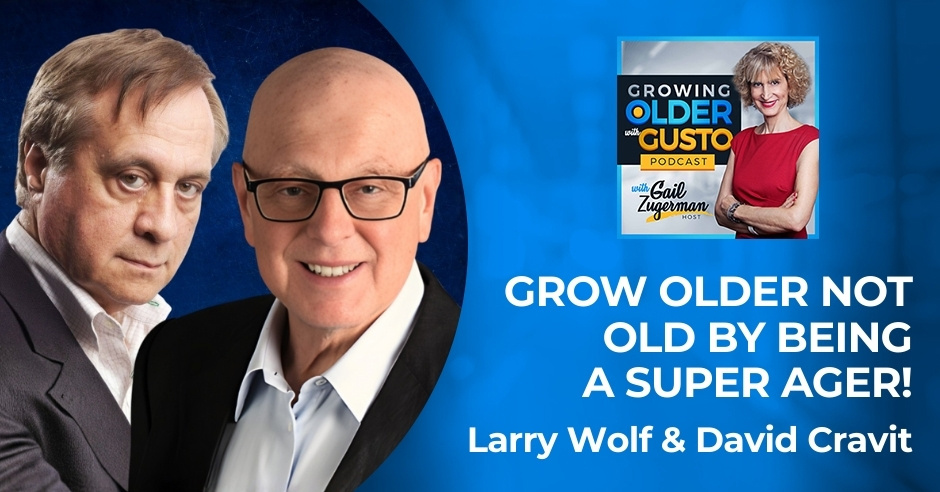
If you want to spend your senior years with meaning and purpose, every single aspect of your life must be nourished and cared for. From your physical needs to your mental state, you must ensure that everything receives the attention it truly needs. Gail Zugerman chats with Larry Wolf and David Cravit, who talk about the seven pillars of the SuperAging lifestyle. Together, they discuss how to nurture yourself and your relationships to grow old without actually getting old. Larry and David also explain how to exercise your brain regularly with daily puzzles and why older people must stay vigilant for online scams.
—
Watch the episode here
Listen to the podcast here
Grow Older Not Old By Being A Super Ager! With Larry Wolf & David Cravit
Welcome to Growing Older with Gusto. I’m Gail Zugerman, the host of this show, which is dedicated to the art of helping people grow older in a positive and productive way. We have two guests on the show, David Cravit and Larry Wolf. Both men are well recognized as leaders in what is called the SuperAging Movement. David is an established author in this genre and a co-founder of SuperAgingNews.com, which tracks the SuperAging revolution. He is often seen on TV as a voice for the SuperAging Movement.
How David And Larry Got Into The SuperAging Movement
We also have Larry Wolf, who is the other co-founder of SuperAgingNews.com, a digital information service delivering the latest developments on how to thrive into our 80s and 90s. He is the CEO of the Wolf Group and advises Fortune 500 companies on communication strategies. He saw an opportunity in the area of SuperAging and teamed up with David. They have so much to tell us about this movement. Let’s dive in. I know from reading that centenarians are the fastest-growing age group in the US. What got you both interested in this movement?
It is the fact that we’re both getting older. People are living a lot longer. We became interested in what we can do to maximize their quality of life, very similar to what you’re doing. We thought there was a real opportunity to positively brand aging and amplify that branding with a lot of useful information from your finances to the latest medical research, to your health, to lifestyle. As you say, getting older with gusto. We thought there was a real opportunity. There was a lot of good stuff out there in diet and exercise, but there was no one publication or one book that put it all together and took the whole idea of how you live longer and healthier and have a more fulfilling life.
David, do you have anything to add?
I have one other thought. I started writing about this in 2008. I wrote a book called The New Old, which was about how Baby Boomers, of which I’m a Baby Boomer, were reinventing the idea of aging by not wanting to be thought of as old. At that time, that didn’t presuppose longevity. In other words, the Boomers were saying, “Even if I don’t live one day longer than my father or grandparents, I’m not going to age the way they did. I’m not going to be a geezer ever. In fact, I’m not going to get off the stage if I don’t have to,” because the Boomers are the first me generation. I can be a little critical of Boomers being one type A generation.

The spotlight was always on us. Why should the music stop now? It was an attitudinal book. Both Larry and I come out of the advertising business. We were colleagues. We were in the ad business. We understand consumers, marketing, and how to analyze all that. I know you were in qualitative market research. It was an attitudinal book, which said the Boomers are not going to age the way the previous generations did as a matter of generational attitude. What happens is, “I don’t want to get older. I don’t want to be a geezer.”
Fast forward fifteen years. “Wait a minute. I actually could live longer. It’s all this longevity stuff that’s happening with these medical discoveries and these new treatments.” It’s a perfect intersection of attitude that suddenly becomes quite achievable. It isn’t just a quaint little sociological observation about the Boomers who are going to die at the same age as their predecessors. You can now live longer. I physically don’t need it. You yourself have used that phrase. About an hour from now, we’re going to be an hour older. The old part, do you? That’s why it is the subtitle of our book. Getting older, sure. Without getting old is the qualitative side. That’s what the whole premise of SuperAging is.
Having A Positive Attitude And Being Aware At All Times
I know in your book and your workbook that you’ve identified the seven pillars, or what you call the seven A’s of SuperAging. Let’s start talking about that because there are so many pillars that perhaps people don’t think about too much. They’re all important. Have you written about them in order of their importance, or throw them out and they’re all important?
Let me take the first two, and then I’ll hand them over to Larry. The first two are foundational. Without the first two, the other five don’t have the same power. Let’s say they can happen. They are the umbrella. They are attitude and awareness. Attitude means to have a positive attitude. It does not mean a Pollyanna attitude but a belief, an optimism, about the future. I have a future. I could be 65, and on paper, I’m supposed to be officially old. I think, “I got 30 years to go.” I think, “I got four years.”
They’ve now proven clinically and biologically that having a positive attitude isn’t a generic good thing. It’s actually a biologically good thing. They know what happens at the cellular level. People who are positive live longer because they have less stress. Less stress equals less inflammation. Inflammation is the number one cause of age-related disease. There’s a reason. We almost insist that that’s the foundation.
People who are positive live longer. They have less stress and therefore have less inflammation.
The second one is awareness. As Larry said, there’s a torrent of information. We don’t intend to compete with that information. As I said, we’re marketers. We’re not doctors. We’re not clinicians. We’re not physical trainers. We’re not financial planners. We see ourselves as the curators of that information, snagging it, organizing it, and coordinating it in our books and on our website to make it easier for the reader to absorb in an orderly way.
Every single piece of information we bring is sourced from some third-party authority. It isn’t David and Larry dreaming up stuff. It’s us going and looking at the medical reports, the research reports, and all the books. All that information is our friend, but we want to streamline it and organize it. From those two things, I do believe in a future I’m optimistic about. I can make these decades something valuable. I need the information to help me do. From those two foundations come the other five, which Larry can run through for us.
Let me ask you before we get started. Would this positive attitude on a cellular level help with my golf game?
Yes, because longevity is the goal. Remember, what we’re after here is living better and living healthier. If you want to be ripped, you’ve got to go to the gym. If you want to be a scratch golfer, attitude alone may not do it. If you believe you’ve got a lot of years ahead of you, you may be a lot more patient about your golf game. You might feel better about the little achievements along the way. If you think, “I’ve only got a couple more years before I’m done. How come I’m still not breaking 100?” It’s how you look at it.
Staying On The Move, Setting Goals, And Maintaining Health Attachments
Larry, do you want to tell us a little bit about the activity?
There are a lot of elements to the activity. First and very obvious is that diet makes a huge difference. You need to have a good diet. We talk about that in some depth, but the overall strategy is simple. It is simply portion control, avoiding sugar and processed foods, a diet that’s fundamentally vegetarian, and above all, food that you enjoy. It is taking charge of your diet. We give you all sorts of specific tips. My wife loves reading the newsletter every week to get all the incredible healthy recipes, not only because they’re good for you, but they taste good. It’s a culinary adventure.
A very obvious thing, you either use it or you lose it. The older the vehicle gets, whether it’s an older automobile or my body, the more maintenance it needs. Flexibility, stretching, keeping everything working, aerobics, maintaining your aerobic capacity, balance, breathing, and strength training, all of these things are critical. A lot of them can be achieved with simple exercise snacks, five minutes throughout the day. You don’t need a gym or fancy equipment. Most of the essential ways to keep yourself fit, you can do at home.
You either use your body or you will lose it.
Also, as important as physical exercise is mental exercise. You’ve got to keep exercising your brain. It is absolutely critical. You have to keep challenging yourself with new things. For instance, I’ve taken up Tai Chi swordsmanship. It’s laughable to watch me do it. I’m not very good at it, but I find it challenging. For me, it’s a totally new discipline. Overall, you need to take control of your own life. You’re in charge of your well-being. You have to make sure you have the right medical team and the right support team in all areas. That is a summary of the activity.
Also important and related to activity is accomplishment. You need purpose. You need goals. When you wake up in the morning, you need things to do that are meaningful. Whether it’s pursuing a new career, maintaining your old career, part-time, going back to school, or volunteer work, it is very important. You need to do things that give you a sense of accomplishment and that give you purpose. Activity and accomplishment are critical.
Next, equally critical, attachment. You need meaningful relationships, a whole network of people. I’m lucky enough to have been married to the same incredible lady for 59 years. We have a couple of great kids. We have great-grandkids and great daughter-in-laws. We’re lucky in a family sense, but beyond family, you need a social network. The connection with people is essential. There is science behind this. Attachment is such a critical variable in well-being, loneliness, and isolation. It’s a very critical medical problem for a lot of seniors.
Larry, do you have any tips for our readers on how you make friends when you’re older? Is there any special sauce or tips you have?
There are a lot of ways, like group activities, whether it’s a book club, joining a sports team, or all kinds of social activities. Plus, there’s the internet, which is a great vehicle for making new friends. Unlike the market’s general belief, older people are very computer savvy.
I learned that.
Can I cut in on one thing here, real quick? I’m sorry. This is a great question, Gail. We do write about this very often on our website, SuperAgingNews.com, rekindling old friendships and making new friendships. How do you manage all these relationships? I watched with interest your interview with Philip Slayton, who talked about people who age. Some people die. Other people haven’t died. He was also lucky in that he had family and grandkids. Larry is completely right about the internet, but it ties back to the aid for awareness because there are so many new things going on that you should know about. For example, the internet is one. Virtual companions are starting to become a thing.
In all the novels that are coming out right now, they’re always talking about people having relationships with these bots or whatever.
The medical community and the aging in place industry, which is a whole other topic, is developing avatars and virtual companions for people who are either remotely located or who don’t have physical relationships that they can have with family or friends. It is by keeping up to date with some of this and trying some of it out, because, as Larry says, it’s very accessible, but you have to know about it. We do report on it. It’s a great question. Sorry, I didn’t want to interrupt, but I wanted to add that little factoid to the mix.
Achieving Personal Independence And Dealing With Ageism
From there, I’ll go on to autonomy. For one obvious thing, if you’re going to live longer, you need the money to do it. Financial independence is very important as you grow older. Most critical is physical independence. You want to be in charge of your own life. You want to maintain your mobility. You want to stay in your own familiar environment, your own happy home. There’s incredible stuff happening with age technology. We cover a lot of this in our newsletter, but there are so many technical opportunities to make your home more user-friendly.
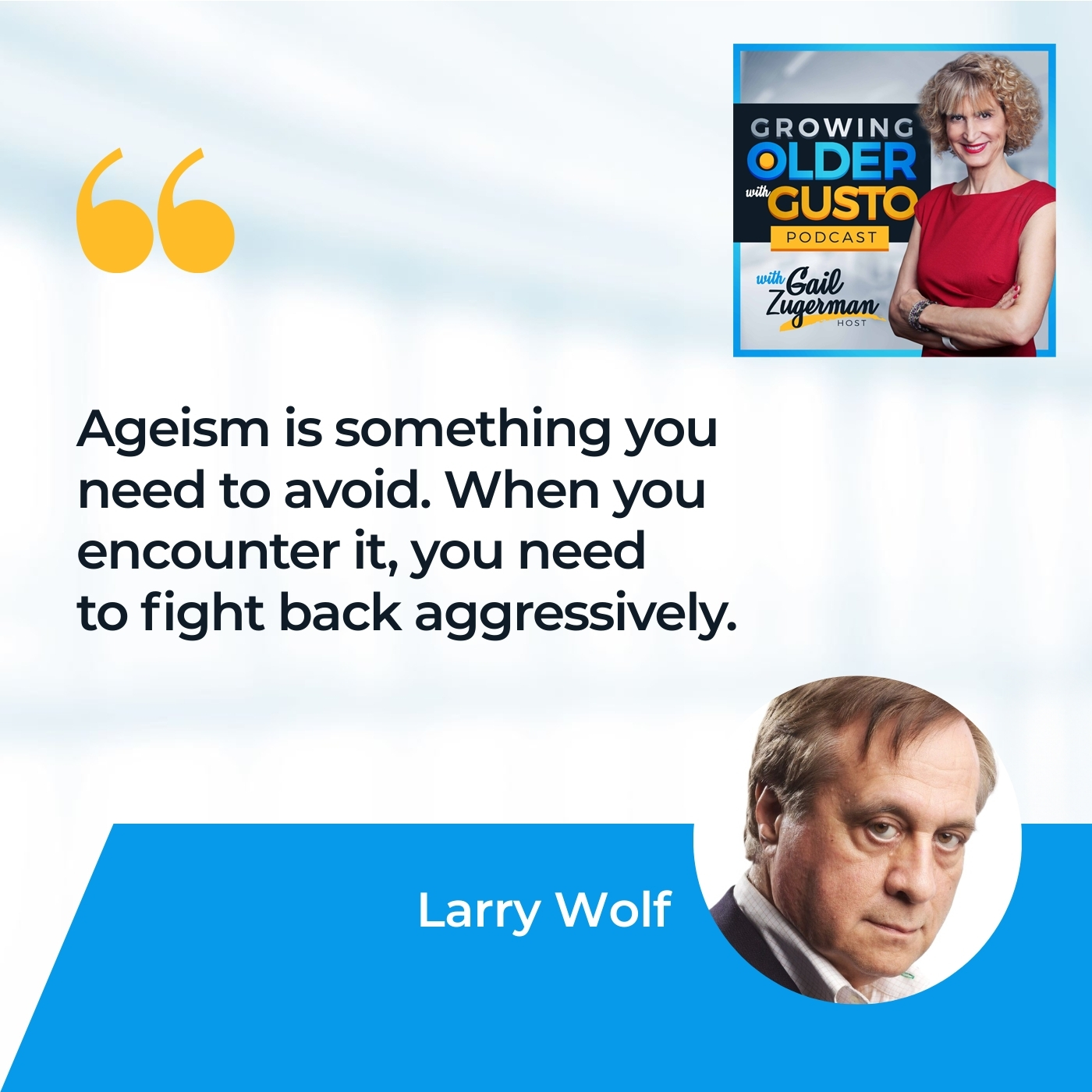
Lastly is avoidance. One of my major irritations is ageism. You see ageism in the marketplace. You see it in politics. You see it medically, which can be dangerous. “This old guy is in his 80s. Why does he need this new technology? We’ll deal with our younger patients first.” Ageism is something that you need to avoid. When you encounter it, you need to fight back aggressively. Older people, although they’re digitally savvy, seem to be a prime target for scams. As technology gets more sophisticated, the scammers get a lot more sophisticated.
For instance, there are scams where they can replicate the voice of a grandchild. “Grandpa, I’m stuck here. I need money.” You’ve got to be very careful in avoiding scams and only deal with credible and trusted sources. Don’t do anything new on the internet that involves money that you don’t thoroughly check out. This is, in a nutshell, a summary of the seven A’s. David or I can expound on any of these in great detail. That’s the fun and excitement of our newsletter. It deals with so many new interesting topics every week. David is the primary editor. Every time I see a new article from David, I learn something. It’s amazing.
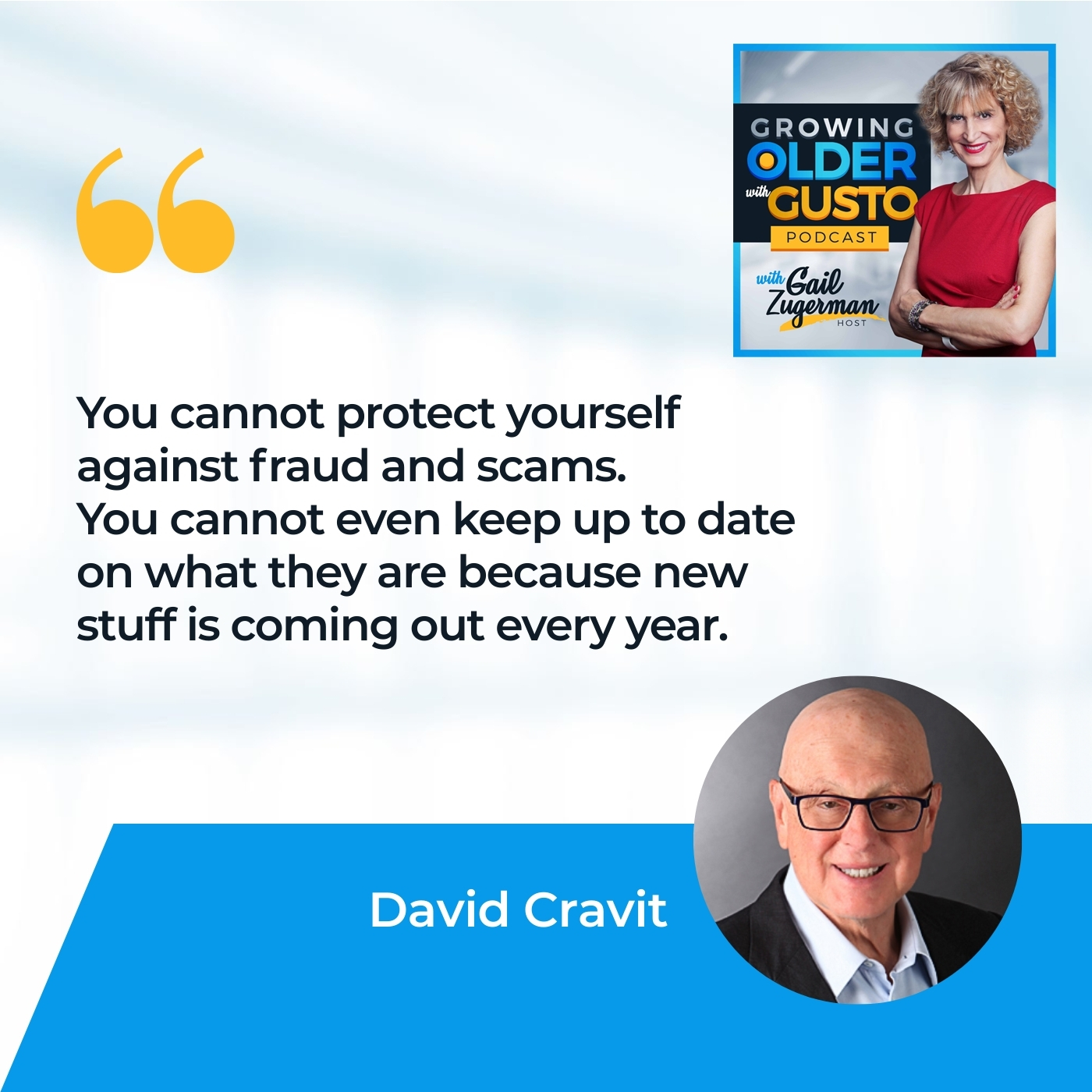
Remember, these articles are sourced from others. I go back to my plug for awareness again. Larry said it, frauds and scams. There’s actually no way of protecting yourself against fraud and scams. That doesn’t include being up to date on what they are, because every year, new stuff is coming out. New things are being developed. The FBI and the RCMP in Canada are very good at publishing statistics, updates, and warnings about the latest techniques. As Larry pointed out, much of it is AI. Again, you’ve got to be aware of it, though. You have to stay in the game. You have to stay in the loop and be informed of these new things.
Both my husband and I have gotten emails from the state of Illinois saying that we didn’t pay our tolls. We don’t have a car in Illinois.
They can send out a million of those. They only need 1% of them to hit. The real danger with AI, as Larry pointed out, is that they can clone your relatives, but they can also clone you. There are scams now where they are cloning the person, the victim, and then having that clone contact other people and get money that they think they’re sending to you, or even deal with your bank and ask for money to be withdrawn, and so on.
You have to be very alert. There’s no answer for this, except to stay up to date because every year, the bad guys come out. We’re coming into Thanksgiving, Christmas, gift giving, charitable donation giving, and Medicare renewal time. If you know how many scams there are of consultants claiming they’re going to help you renew your Medicare in a better package than you had before, are they from Medicare? Who are they? Do you know who they are? We’re writing about this routinely because we see it as an information tool that you have to have, unfortunately.
Satiating The Brain’s Craving For Novelty
Getting back to staying mentally fit, I’m also interested in that. Do you believe in these games? The New York Times says every day, they have Wordle, Connections, and a crossword.
Yes, absolutely. There are two angles to that. Number one, there are people who do it because they’ve been lifelong puzzle people. It’s fun. There’s no reason to stop doing it. The brain wants new challenges. It’s a bit of finesse. They’ve got to be hard, but not too hard. They can’t be so hard that you have no hope of doing them. It doesn’t need to be profound. I go back to your guest who took up birdwatching at 80. Suddenly, he’s a birder. He never paid any attention to it before. He realizes that there are all these colorful birds. He’s enjoying it. The main reason is that he should enjoy. He shouldn’t be gritting his teeth and doing it if he hates it. It is helping his brain, like taking up a musical instrument and learning a foreign language.
The brain always looks for new challenges. Always give it some new puzzle to solve.
We did an article. I want to show you the profound effect of something new in research. This has been studied where they took a control group and a test group of people in their 70s. They gave them a cognition test beforehand. They taught the test group Spanish. None of them knew a word of Spanish. I forgot if it was a month or two months of Spanish lessons. It was online every day. They left the control group alone. They take our cognition test again. The test group that had learned Spanish gained, and I forget how many percentage points, but a dramatic improvement in their cognitive skills. None of them in either group had dementia, but the cognitive skills went up. They weren’t particularly great in Spanish. It didn’t mean that they had mastered Spanish.
They were using those muscles.
The brain wants new stuff. The brain craves novelty.
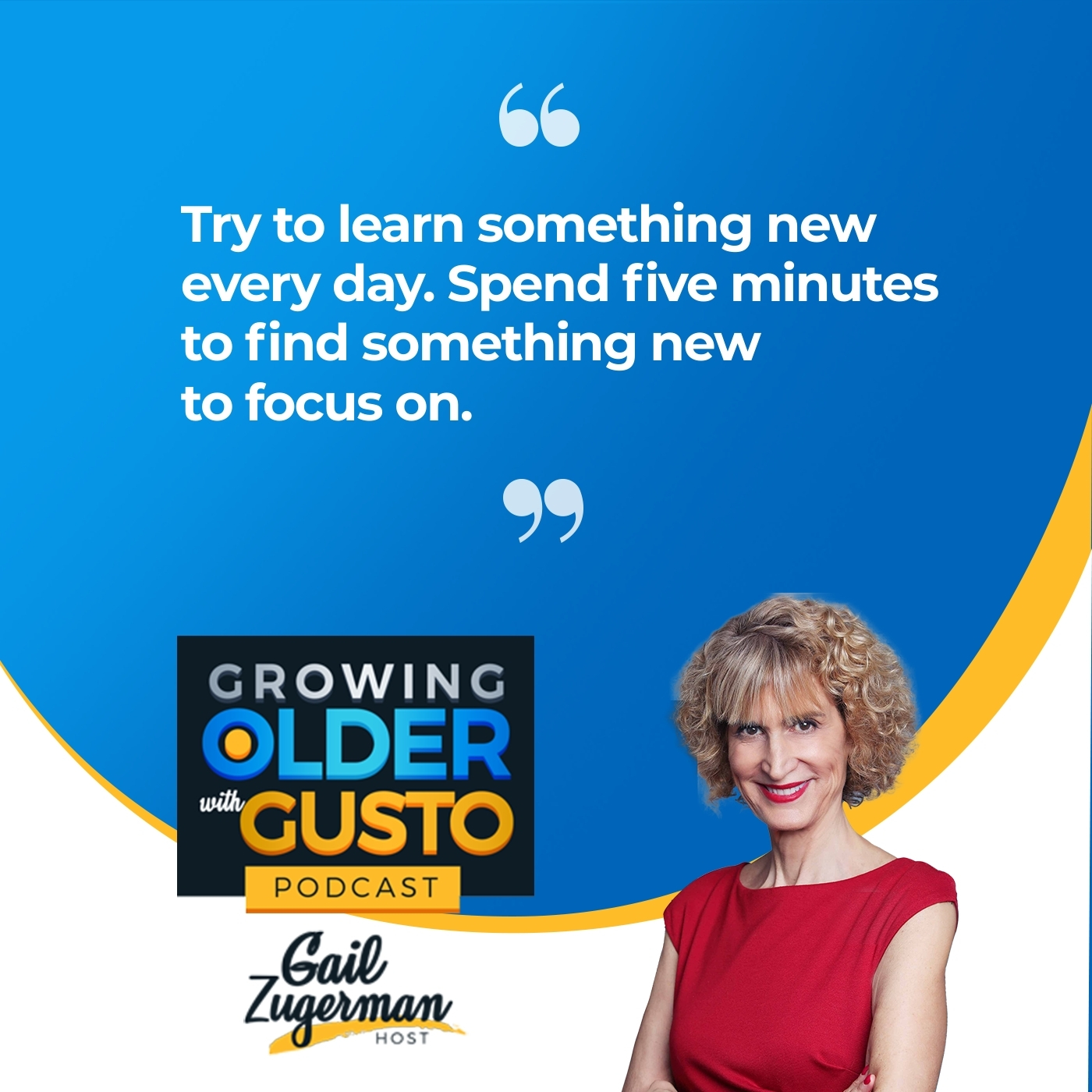
I read something that said you should try to learn something new every day. Spend five minutes. Find something new to focus on.
It could be something brand new, or it could be a new level of the same topic. I’m moving on to lesson two of Spanish. I learned ten more words. You’re completely right. This permeates the whole SuperAging lifestyle, because now what we’re seeing is that it spills over into other things. For example, unfamiliar destinations for travel. I don’t want the same old destination. There are new formats for travel. Skip-gen travel is a big thing now with grandparents and grandkids. The parents stay home.
It’s a different dynamic. It’s a different experience, walking through those streets of wherever it is with your grandkids, and the parents aren’t there. That’s why unfamiliar destinations are good. Maybe it’s a new language. Maybe you have to concentrate a little bit heavier. You take out the street map. You navigate your way to the church, the site, or whatever the thing is. It’s all working almost automatically, subconsciously helping the brain develop new pathways.
One thing I want to add, even at a very simple level, doing crossword puzzles, Wordle, spelling bee, or whatever, expands and keeps your brain active. It’s fun. It’s relaxing. In fact, we have on our website something called SuperAging Brain Games if you’re interested in getting tons of good puzzles every month. I love to do this stuff. Particularly when I’m working and I’m tired, I escape and relax for ten minutes, being challenged by a puzzle. It has nothing to do with anything. This is true of my wife as well. We sometimes do them together. It could be a fun social experience. Puzzles, I like them because they’re fun. The side thing is they have real brain-expanding benefits.
Doing crossword puzzles, Wordles, or spelling bee expands and keeps the brain active.
I’m going to check that out. I like to do stuff. I do that every morning.
Me, too.
Me, too. I’m a cryptic nut. I like cryptic puzzles.
How Larry And David Spend Their Free Time
What other hobbies do you two have? You’re probably very busy with the book, the workbook, the website, and everything else.
I’ll begin. I do Tai Chi, which I find both very mentally stimulating and relaxing. I’m an atrocious golfer. I used to be an avid tennis player, but I have some eye issues that have taken me off the tennis court. I used to be an avid skier. I’m an avid golfer instead. I love to do puzzles. I love to listen to good podcasts and audiobooks. I don’t know how to cook, but I love to eat. I’m married to an incredible cook. We like to go out, have new culinary experiences, and do interesting things with friends. Generally, there are so many exciting things going on in the world now. It’s an incredible time to be alive. In so many ways, from so many perspectives, it’s an interesting world. It’s my avocational life.
Mine is reading. I’m an insane reader. I’m one of these guys. I read on my phone. I read on my tablet. I read physical books. I usually have at least three physical books going at once. I can’t pick up a book, read it, and make that the only book I’m reading. I jump around a lot. I love music. It’s associated with our move from Canada to South Carolina. We didn’t bring everything with us. We still have stuff to go. I was a five-string banjo player, bluegrass. I play a five-string banjo not very well, but I enjoy it. There is a little bit of fun. I never took up a sport like golf or tennis, but I’m a swimmer, and I’m a walker. Those are my activities.
What would be the best way for our readers to find your book and workbook, or contact you?
SuperAgingNews.com is the website. There will be our bios, our books, where to get the books, and how to sign up for our free newsletter. It’s all there in one place.
Enjoy Whatever You Are Doing Right Now
I’m out of questions. If there’s anything else you want to talk about, we have a few minutes left.
I want to make an observation about what you’re doing, because you are basically proving SuperAging by introducing all these different people who are doing all these interesting things over the age of 70. You may have said 75 as your qualifier, but that’s exactly it. I do want to say one other thing. It’s about longevity, but it’s also about enjoying and having value in what you’re doing right now. If you were 65, and you were saying, which is true, the next 30 years can be wonderful. They’re not wonderful only because you made it to 95 and you proved it. It was because wonderful stuff happened that you should enjoy and be proud of.
At a time when the old model of aging was, “You’re going to be in decline. You’re going to be surviving maybe if you’re lucky,” we’re saying, “Forget about surviving. How about thrive?” That has a value of its own. We’re all about longevity and SuperAging, but it’s making those years wonderful as you are living them. It’s not just the wonderfulness that kicks in. If you make it that long, it’s there, wonderful as you go along. The simple tips to make it so are in our model of SuperAging, but people should be proud of and enjoy what they’re doing right now.
You have a great model going. Everybody should check out this book and this workbook. If you enjoyed this episode, please leave a review on iHeart or Apple. Please remember to always stay curious and to stay connected. Thank you both for your time. It was a great episode.
Thank you so much, Gail. We enjoyed. It.
Thank you.
Important Links
- SuperAging News
- David Cravit on LinkedIn
- The New Old
- Larry Wolf on LinkedIn
- SuperAging: Getting Older Without Getting Old
- The SuperAging Workbook
- All Remaining Passengers: An Octogenarian’s Take On Legacy with Philip Slayton
- Brain Games | SuperAging News
About David Cravit
 David is an author an co-founder of SuperAgingNews.com, a digital information service. He is seen as an expert in the SuperAging Movement.
About Larry Wolf
 Larry is the other co-founder of this service and is CEO of the Wolf Group. He advises Fortune 500 companies on communication strategies.
Both came from advertising backgrounds.

0 Comments